
The Mindful Play: Unveiling The Mental Health Benefits Of Trading Card Games
Feb 6th 2024
The Mindful Play: Unveiling the Mental Health Benefits of Trading Card Games
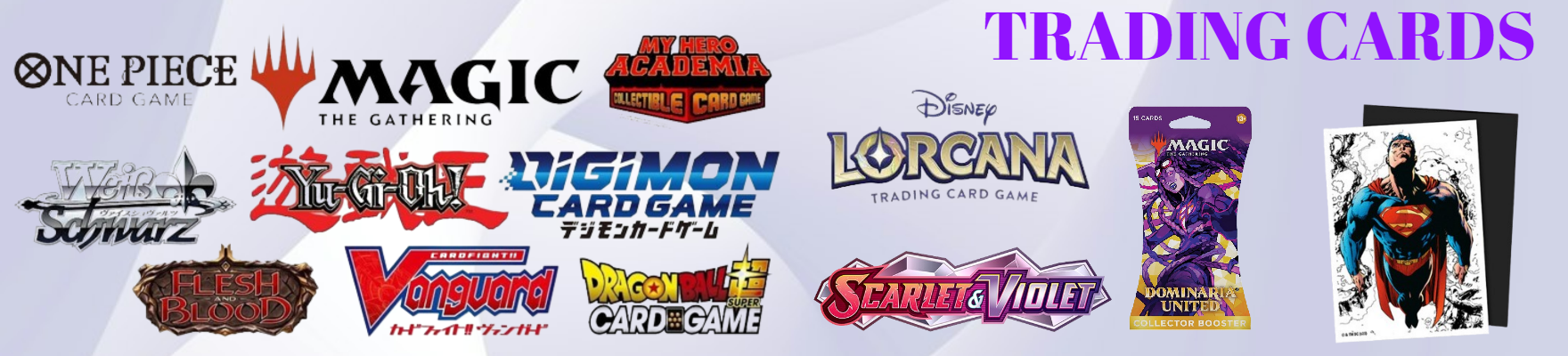
In the vibrant realm of gaming, trading card games (TCGs) have captured the hearts and minds of a diverse and dedicated player base. Beyond the thrill of competition and the joy of collecting, TCGs offer a unique gateway to enhancing mental well-being. It requires high levels of strategic thinking, problem-solving, and critical decision-making, fostering mindfulness and cognitive skills.
Players analyze game states, anticipate opponents' moves, and devise effective strategies. TCGs demand sharp problem-solving skills to overcome challenges and obstacles, promoting creativity and innovation. Critical decision-making is crucial, with every move impacting the game's outcome. Games like Magic: The Gathering and Yu Gi Oh are renowned for promoting strategic thinking. TCGs offer stress relief through immersive gameplay, social interaction, and the enjoyment of executing strategies, contributing to relaxation and mental well-being. In this exploration, we delve into the mindful play of TCGs and uncover the multitude of mental health benefits they bring.

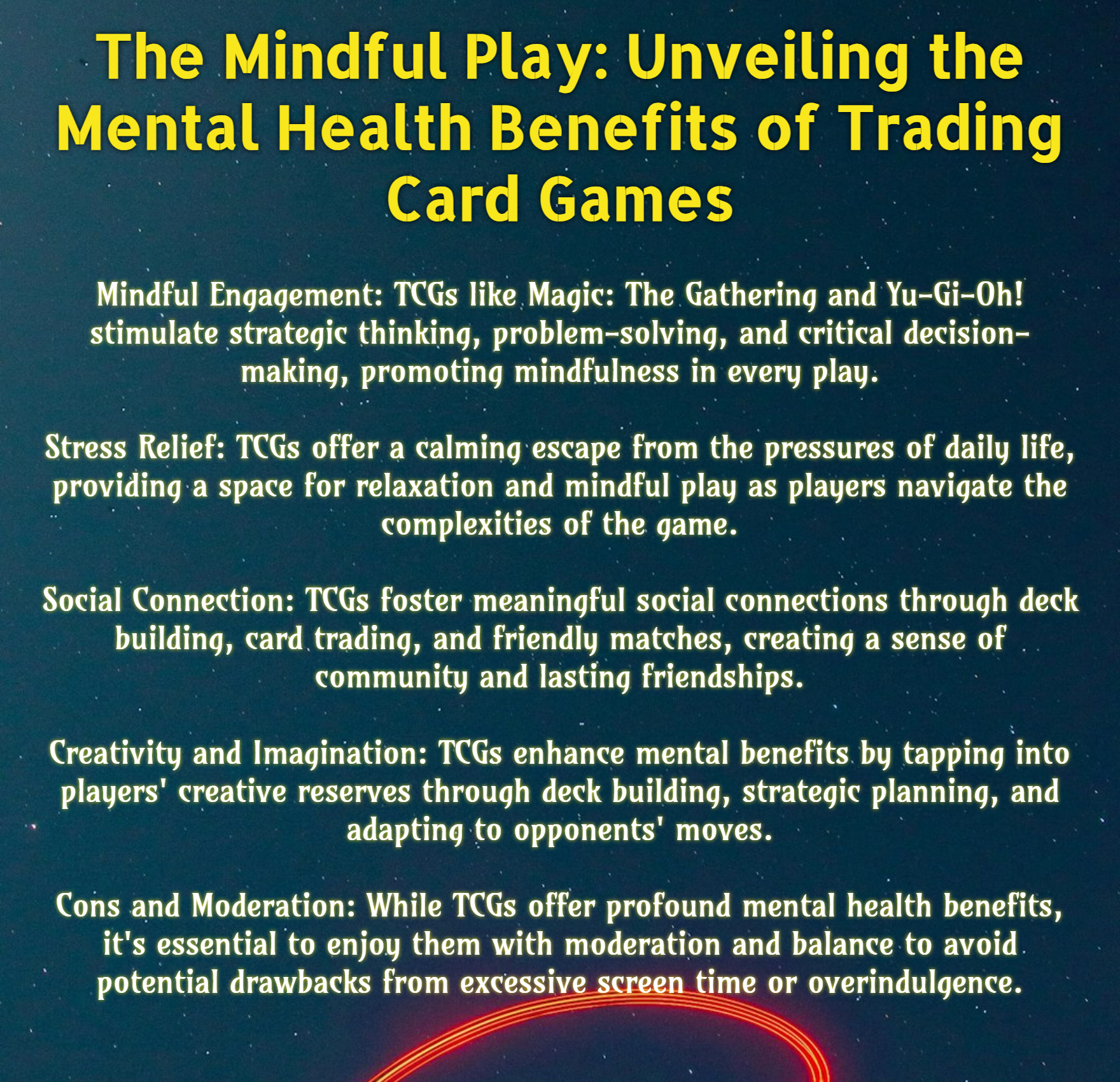
Mindful Engagement
Trading card games (TCGs) are not merely recreational pastimes but intricate mental exercises that demand strategic thinking, problem-solving, and critical decision-making. This mindful engagement not only enriches gameplay but also fosters the development of essential cognitive skills, making TCGs a unique and rewarding experience for players.
At the core of TCGs lies the necessity for strategic thinking—a mental process that involves analyzing the current game state, anticipating opponents' moves, and formulating effective strategies to secure victory. Players must navigate through complex scenarios, considering various factors such as card interactions, resource management, and long-term game plans. This strategic engagement encourages mindfulness, as players immerse themselves fully in the game, staying attuned to every detail and potential outcome.
Moreover, TCGs demand sharp problem-solving skills as players encounter obstacles and challenges throughout the game. Whether it's overcoming resource constraints, countering opponent strategies, or adapting to unforeseen circumstances, players must continuously assess the situation and devise innovative solutions to overcome obstacles. This constant problem-solving process not only enhances cognitive flexibility but also promotes creativity and adaptability.
The trading card games offer a unique blend of mindful engagement and stress relief, making them not only entertaining pastimes but valuable tools for enhancing mental health and cognitive skills. Through strategic thinking, problem-solving, and critical decision-making, players embark on a journey of self-improvement and enjoyment, finding solace and satisfaction in the intricacies of TCG gameplay.

Stress Relief
In the fast-paced world we live in, stress relief is a precious commodity. TCGs provide a welcome escape, offering a space for relaxation and mindful play. As players strategize and navigate the complexities of the game, they experience a calming effect, creating a sanctuary away from the pressures of daily life.
Studies have shown that activities like playing TCGs can significantly reduce stress levels. One study published in the Journal of Psychosocial Nursing and Mental Health Services found that participants who played TCGs experienced lower levels of cortisol, a hormone associated with stress, after gameplay sessions. This suggests that TCGs can have a tangible impact on stress relief.
But it's not just about the science—many players attest to the calming effects of TCGs from personal experience. Take Sarah, for example, a busy professional who juggles multiple responsibilities. After a long day at work, she finds solace in her favorite TCG. "Playing TCGs allows me to unwind and focus on something other than my worries," she says. "It's like stepping into another world where I can just be in the moment and forget about everything else."
So next time you're feeling overwhelmed, consider picking up a deck of cards and immersing yourself in a game. You might just find that the stress melts away as you focus on the intricate strategies and captivating gameplay of TCGs.

Social Connection
TCGs are more than just a solo adventure they're a bridge to meaningful social connections. Building decks, trading cards, and engaging in friendly matches contribute to a sense of community.Whether it's gathering around a table at a local game store or connecting online through forums and social media groups, TCG enthusiasts have numerous avenues for interacting with like-minded individuals. These interactions often transcend the boundaries of age, gender, or cultural differences, fostering a sense of inclusivity and belonging.The camaraderie that develops among players is palpable.
Through countless battles and trading sessions, friendships are forged and bonds are strengthened.Take Michael and David, for example, who met at a TCG tournament several years ago. What started as a shared passion for the game blossomed into a deep friendship. "TCGs have given us a common ground to connect on," says Michael. "We've shared victories, defeats, and countless laughs along the way."
The positive impact of shared experiences within the TCG community extends beyond the game itself. Many players find that their involvement in TCGs enhances their overall well-being by providing a support network during challenging times and celebrating successes together. Whether it's cheering on a friend during a tournament or offering words of encouragement after a tough loss, the TCG community serves as a source of comfort and solidarity.
In essence, TCGs offer more than just entertainment; they provide a platform for meaningful social interactions, fostering friendships, and nurturing a sense of community. So next time you sit down to play a game of cards, remember that you're not just engaging in a hobby—you're connecting with others and building lasting relationships.
Creativity and Imagination
The creative aspects of TCGs add an extra layer to the mental benefits. Deck building, strategic planning, and adapting to opponents' moves require players to tap into their creative reserves.Trading card games are fertile grounds for the cultivation of creativity and imagination, offering players a canvas upon which to paint their strategic visions.
At the heart of TCGs lies the art of deck building—a process that demands equal parts creativity and strategic acumen. Players are tasked with assembling a collection of cards that not only synergize with one another but also reflect their unique playstyle and preferences.
The process of deck building encourages players to think outside the box, experimenting with unconventional card combinations and strategies. It's a playground where creativity knows no bounds, where players can unleash their imagination and explore new possibilities. Whether it's concocting a deck focused on swift aggression or one built around intricate combos, the only limit is the player's creativity.
But creativity in TCGs extends far beyond deck building. Every game presents a fresh opportunity for players to exercise their strategic creativity, adapting their tactics on the fly to outmaneuver their opponents. It's a dynamic dance of anticipation and adaptation, where every decision shapes the course of the game.
Imagination also plays a pivotal role in TCG gameplay, as players immerse themselves in the rich lore and fantastical worlds depicted on the cards. Whether it's envisioning epic battles between mythical creatures or unraveling the mysteries of a captivating storyline, TCGs stimulate the mind and spark the imagination in ways few other hobbies can.

Cons and Moderation
While the mental health benefits of TCGs are profound, it's crucial to approach the hobby with moderation and balance. Like any form of entertainment, excessive screen time or overindulgence can lead to drawbacks.
One potential drawback of TCGs is the temptation to spend excessive amounts of time in front of screens, whether it's playing digital versions of the game or engaging in online communities. Prolonged screen time can lead to eye strain, disrupted sleep patterns, and reduced physical activity—all of which can have adverse effects on overall health and well-being. It's crucial to strike a balance between TCGs and other activities, ensuring that screen time is kept in check and supplemented with plenty of offline pursuits.
Another consideration is the financial aspect of collecting TCG cards. While the initial investment in a starter deck or booster packs may seem modest, the costs can quickly add up for avid collectors or competitive players seeking to build powerful decks. It's easy to get caught up in the excitement of acquiring rare or sought-after cards, but it's important to budget responsibly and avoid overspending. Setting a monthly spending limit for TCG-related expenses can help prevent financial strain and ensure that the hobby remains enjoyable without breaking the bank.
To enjoy TCGs responsibly, consider the following tips:
- Set limits on screen time: Allocate specific time slots for playing TCGs and make sure to balance them with other activities, such as outdoor recreation, socializing with friends, or pursuing hobbies that don't involve screens.
- Budget wisely: Establish a budget for TCG-related expenses, including purchases of booster packs, singles, or tournament entry fees. Stick to your budget to avoid overspending and financial strain.
- Trade and share: Instead of solely relying on purchasing new cards, consider trading with other players or borrowing cards from friends. This can help diversify your collection without increasing expenses.
- Prioritize enjoyment over competitiveness: While competitive play can be thrilling, don't lose sight of the primary reason you enjoy TCGs—fun! Focus on the social aspect of the game, building connections with other players, and embracing the creative aspects of deck building and strategy development.
In the hands of mindful players, trading card games transcend mere entertainment—they become a source of mental well-being. The strategic engagement, stress relief, social connections, and creative stimulation they offer contribute to a holistic gaming experience.
As you embark on your TCG journey, remember to savor the mindful play and relish the positive impact it can have on your mental health. So whether you're a seasoned veteran or a newcomer to the world of TCGs, I encourage you to explore this captivating hobby with mindfulness and intention.
Embrace the joy of creative deck building, revel in the thrill of strategic gameplay, and cherish the connections forged within the TCG community. By doing so, you'll not only enhance your mental health but also embark on an enriching journey of self-discovery and camaraderie. May the cards be in your favor!