
Protoss Army Guide – StarCraft Tabletop Miniatures Game
Apr 2nd 2026
Protoss Army Guide – StarCraft Tabletop Miniatures Game
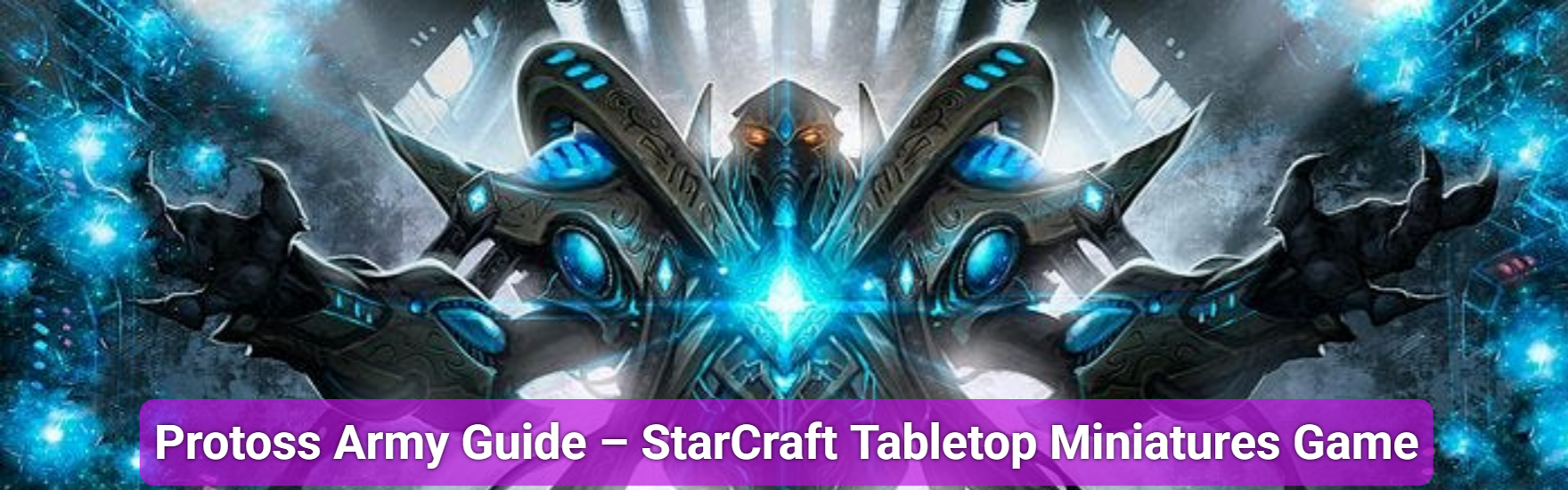
The Protoss stand as one of the most sophisticated and formidable factions in the StarCraft universe. Defined by advanced technology, disciplined warfare, and immense psionic power, they represent an elite force where every unit is designed to perform with precision and purpose.
In the StarCraft Tabletop Miniatures Game, the Wave 1 lineup introduces a focused selection of Protoss units that capture this identity perfectly. Rather than relying on numbers, Protoss armies succeed through synergy, positioning, and the effective use of specialized roles. This guide provides a refined overview of Protoss strategy, key units, and how to build a cohesive and powerful army from the ground up.
Understanding the Protoss Identity
Protoss is not about overwhelming the battlefield with sheer volume. Instead, it is about control, efficiency, and impact. Each unit contributes meaningfully, creating an army that feels deliberate rather than expendable.
What defines a Protoss force:
- Elite, high-value units
- Advanced technology and mechanized support
- Powerful psionic abilities
- Strong visual and thematic cohesion
This makes Protoss especially appealing to players who prefer quality over quantity and want an army that looks as strong as it performs.
Core Strategy and Playstyle
Playing Protoss effectively requires a thoughtful approach. With fewer units on the table, every decision matters—from positioning to timing and unit coordination.
Key Strategic Principles
- Synergy first: Units are strongest when supporting each other
- Positioning matters: Proper placement can determine the outcome of engagements
- Protect your assets: High-value units must be used carefully
- Strike with intent: Every engagement should have a clear purpose
Core Strengths
- Durable, high-performance units
- Access to powerful area-of-effect psionics
- Strong hero leadership options
- Flexible combined-arms gameplay
Protoss armies reward players who think ahead and maintain control of the battlefield.
Wave 1 Unit Breakdown
The Wave 1 release introduces a compact but highly effective roster of Protoss units. Each one fulfills a specific battlefield role and contributes to a balanced army structure.
Zealots – Frontline Control and Engagement Specialists

Zealots are more than just durable melee infantry—they are the units that define how and where battles unfold. As the backbone of most Protoss forces, their role is to absorb pressure while actively shaping engagements in your favor.
Primary Roles:
- Initiating and controlling close-combat engagements
- Absorbing and redistributing incoming damage
- Securing and contesting key objectives and terrain
How to Use Them Effectively:
- Deploy Zealots slightly ahead of your army to establish a controlled frontline, not a reckless charge
- Use them to lock down enemy threats, preventing access to your more fragile units
- Maintain formation cohesion so they support, rather than isolate, your force
Key Synergies:
- Create space for ranged units to operate safely behind them
- Enable high-impact abilities by holding enemies in place
- Benefit significantly from nearby support and leadership effects
Common Mistakes:
- Overextending and breaking formation
- Charging without support, leading to isolated losses
- Treating them as expendable instead of strategic assets
Advanced Insight:
A well-positioned Zealot unit doesn’t just survive—it controls tempo. If your Zealots are only soaking damage and not influencing enemy movement or positioning, you’re not getting their full value.
Stalker – Mobile Strike and Ambush Specialist

The fall of Aiur forced the Nerazim to evolve beyond pure stealth warfare. In response, they created the Stalker—a fusion of advanced machinery and the shadow essence of a Dark Templar, bound into a relentless war construct.
On the battlefield, Stalkers are not just ranged units—they are precision engagement tools designed to fight on their own terms. Their defining strength lies in their ability to reposition instantly, allowing them to control distance, exploit weaknesses, and disengage before retaliation.
Battlefield Role:
- Mobile ranged harassment and flanking
- Targeting vulnerable or high-value enemy units
- Repositioning to maintain tactical advantage
How to Use Them Effectively:
- Strike from unexpected angles to disrupt enemy formations
- Use mobility to avoid prolonged engagements you can’t win
- Reposition after attacking to stay out of danger and maintain pressure
Key Strength:
- Their displacement ability allows them to dictate engagements, making them extremely difficult to pin down
Common Mistakes:
- Using them as static ranged units instead of mobile threats
- Overcommitting into sustained fights where mobility is wasted
- Teleporting aggressively without a safe follow-up position
Advanced Insight:
Stalkers excel at creating uneven fights. If they are trading evenly or staying stationary, you’re losing their biggest advantage—the ability to choose when and where combat happens.
Sentry – Defensive Control and Battlefield Shaping Unit

As the Protoss population declined, reliance on advanced combat constructs became essential. The Sentry emerged as a highly specialized support drone, designed not for direct damage, but for controlling the flow of battle itself.
Often deployed alongside Zealots and Stalkers, Sentries enhance survivability and enable precise positional play through powerful defensive and control abilities.
Battlefield Role:
- Defensive support for frontline and midline units
- Damage mitigation against ranged threats
- Terrain and movement control through force manipulation
How to Use Them Effectively:
- Activate Guardian Shields at the start of ranged engagements to reduce incoming damage across your army
- Use Force Fields to split enemy formations, isolate key units, or block chokepoints
- Position Sentries safely behind your frontline—they are valuable, but fragile
Key Strengths:
- Ability to reshape engagements without direct combat
- Strong synergy with Zealots (holding lines) and Stalkers (controlled skirmishing)
Common Mistakes:
- Using Force Fields reactively instead of proactively
- Poor placement that allows enemies to bypass or ignore control effects
- Exposing Sentries too early, losing their utility before key moments
Advanced Insight:
Sentries don’t win fights through damage—they win through denial. A well-placed Force Field can be more impactful than an entire unit’s attacks, turning a fair fight into a decisive advantage.
Artanis & Pylon – Command Archon and Force Multiplier

Artanis, Hierarch of the Daelaam, stands as both a unifier and a symbol of Protoss resurgence. A legendary warrior and leader, he commands the Khalai with unwavering resolve, determined to reclaim Aiur and restore the glory of his people—no matter the cost.
On the tabletop, Artanis is far more than a powerful combatant. He functions as the central Archon of a Protoss force, enhancing nearby units while reinforcing your army’s cohesion and staying power.
Battlefield Role:
- Central command unit and leadership Archon
- Force multiplier for both melee and ranged elements
- Durable frontline presence in critical engagements
How to Use Him Effectively:
- Position Artanis near the core of your army to maximize his aura and support effects
- Commit him to key engagements, where his presence can swing momentum
- Use him to stabilize pressured areas rather than chasing isolated targets
Key Strengths:
- Enhances overall army efficiency and durability
- Strong individual combat capability when properly supported
- Creates a unified fighting core that is difficult to break
Common Mistakes:
- Overextending him as a solo attacker
- Keeping him too far back and wasting his support potential
- Committing him too late, after your formation has already collapsed
Advanced Insight:
Artanis is most effective when your army fights around him, not ahead of him. If your force becomes fragmented or drifts outside his influence, you lose a significant portion of your faction’s strength.
Adept – Mobile Harassment and Backline Disruption Specialist

Adepts are highly trained Protoss operatives who sacrifice durability for speed and precision. Designed to eliminate lightly armored targets, they excel at breaking safe positions and punishing vulnerable units that would otherwise remain protected behind enemy lines.
Armed with glaive cannons and enhanced by their psionic transfer ability, Adepts are a constant threat to any opponent relying on fragile backline elements.
Battlefield Role:
- Harassment and flanking unit
- Eliminating lightly armored or exposed targets
- Disrupting enemy backlines and support elements
How to Use Them Effectively:
- Target isolated or lightly defended units to maximize their damage efficiency
- Use psionic transfer to bypass frontline defenses and threaten key assets
- Strike quickly and reposition—avoid prolonged engagements
Key Strengths:
- Exceptional mobility and reach into otherwise safe areas
- Strong damage output against priority soft targets
- Forces opponents to spread out and defend more carefully
Common Mistakes:
- Engaging heavily armored or durable frontline units
- Overcommitting without an escape or follow-up plan
- Using them as general-purpose fighters instead of specialized disruptors
Advanced Insight:
Adepts are most effective when they create pressure, not trades. Their value comes from forcing your opponent to react, reposition, and protect vulnerable units—disrupting their plan even before damage is dealt.
Why Choose Protoss?
Protoss offers a uniquely rewarding experience, especially for players who value refined gameplay and strong visual design.
What Makes Protoss Stand Out
- Striking, cohesive aesthetic from the very beginning
- Smaller armies that still feel complete and impactful
- Clear faction identity that simplifies decision-making
- Strong synergy between units and roles
For beginners, this clarity can make the early stages of collecting and learning far more manageable.
Is Protoss Beginner-Friendly?
Yes—particularly for players who prefer a structured and focused approach.
Instead of managing large numbers of units, Protoss players can concentrate on:
- Learning a smaller roster deeply
- Building a cohesive force quickly
- Developing strong positioning habits early
While mistakes can be more punishing due to lower unit counts, the faction’s clarity makes it an excellent learning platform.
Building Your First Protoss Army
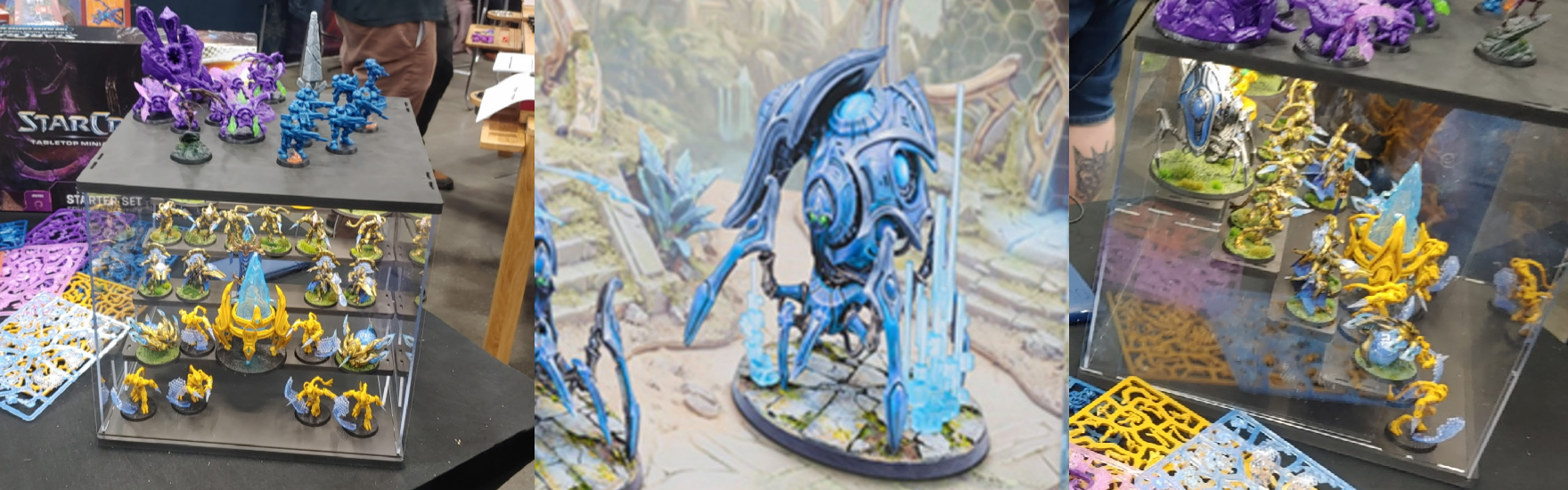
A strong Protoss force begins with a clear plan. Avoid random purchases and instead focus on building around a central idea.
Step 1: Choose an Archon
Start with a defining element:
- Balanced foundation → Starter Set
- Classic frontline → Zealots
- Tech-focused approach → Dragoons or similar units
- Hero-centric strategy → Artanis
Step 2: Reinforce Your Core
Add units that support your initial choice rather than diversify too quickly.
Step 3: Expand with Purpose
Once your army feels complete, introduce new elements like psionic support or additional unit types.
Product Starting Points
If you’re entering the game, certain products provide a smoother starting experience:
- Starter Sets: Offer a balanced introduction with core units
- Founder Editions: Expand your options with additional units and heroes
These bundles are ideal for building a functional army quickly without overcomplicating your early collection.
Hobby and Painting Appeal
Protoss models are particularly rewarding for hobbyists.
Why They’re Great to Paint
- Smooth armor panels for clean finishes
- Natural highlights and sharp edges
- Excellent surfaces for glow effects and energy details
- Strong visual results even with simple techniques
Whether you’re a beginner or an experienced painter, Protoss offers both accessibility and depth.
Strengths and Weaknesses
Understanding both sides of the faction is essential for improving your gameplay.
Strengths
- High durability and efficiency
- Strong unit synergy
- Access to powerful abilities
- Impactful hero units
Weaknesses
- Lower model count
- Reliance on careful positioning
- Vulnerability of support units like High Templars
Mastering Protoss means minimizing these weaknesses while maximizing coordination.
Expanding Your Collection
Wave 1 provides a strong foundation, but growth should always remain intentional.
As you expand:
- Maintain a consistent army identity
- Build around synergy rather than variety alone
- Avoid overloading your collection too quickly
A well-curated Protoss army will always feel more effective—and more satisfying—than a scattered one.
FAQ
Is Protoss a good starting faction?
Yes, especially for players who prefer elite units and a more controlled playstyle.
What should I buy first?
A Starter Set is the most reliable entry point, followed by core units like Zealots or ranged support options.
Is Artanis worth including early?
Yes. He significantly enhances nearby units and provides strong leadership benefits.
Are Protoss models difficult to paint?
No. Their design supports both simple and advanced painting techniques.
Final Thoughts
Protoss offers one of the most refined and rewarding experiences in the StarCraft Tabletop Miniatures Game. With a focused roster, strong thematic identity, and powerful unit synergy, it is a faction that excels when played with intention.
Start with a clear vision. Build gradually. Prioritize synergy over quantity.
By doing so, you’ll create an army that not only performs effectively on the tabletop but also captures the true essence of the Protoss—elite, disciplined, and undeniably powerful.